
Conscious Humanity, No. 124
Celebrating motherhood, 100 incredible years on Earth, deep ecology, neurodivergence, the subtle art, a project will save you, and more...

Welcome to the 124th edition of Conscious Humanity — it’s so good to see you here!
If you’re new here, my name is Emily and I’m a writer, photographer, teacher in higher education, home gardener, single parent, and all-round creative soul. I am in the midst of figuring out how to extract myself from the capitalist-driven, digitally saturated, artificially “busy” life we’re told we must live in order to survive and “succeed.” And I’m helping you do the same.
Below are seven positive things that have entered my orbit in the last two weeks, all chosen as inspiration to slow down and unearth a more creative, nature-connected life. They’re formatted so you can scan through and dive deeper into those that resonate most with you. I offer these things not as noise, but as nourishment. May at least one thing brighten your day, inspire you to take action, or help you return to what matters most.
Celebrating Motherhood
Firstly, today is Mother’s Day in many countries. When my kids attended traditional schools, this meant sending them with $5 to buy a gift at the Mother’s Day Stall and turning a blind eye as they smuggled the “surprise” home in a little bag and put it in a secret hiding place, ready for the Sunday morning reveal. All the handmade cards and finger paintings that usually came with these gifts are still safely stowed in the drawer of my bedside table. Now, with one child doing online school and another homeschooling, there are no “done-for-you” Mother’s Day gifts. But it’s much more about the thought than the physical gifts for me, and the commercial side of Mother’s Day is so annoying!
Gifts are nice (and I love flowers as much as the next girl), but Mother’s Day is a chance to reflect on motherhood in all its complexity. To be grateful for my lovely mum, and for the chance to be “mum” to my kids. And to celebrate the challenging, relentless, and joyful journey that motherhood is.
Mother’s Day can also be an incredibly sad day, for those who have lost their mum, or who can’t be a mum themselves and desperately want to be, but as Amber Adrian wrote recently, motherhood is worth celebrating, unapologetically, both on this day and every day of the year. One thing motherhood has taught me, after almost 16-years as a mum and 9-years as a solo mum, is to always expect the unexpected. My kids are constantly surprising me, in good and bad ways. But mostly, good! Honestly, I’m in awe that so many kids even make it to adulthood, considering all the hurdles along the way! My boys are now at an age where they regularly show care and concern for me, which has been one of the most heart-warming surprises of motherhood.
So, whatever Mother’s Day means for you, I hope you’ll be kind to yourself, treasure your mum, remember your mum, or make peace with your mum.
100 Incredible Years on Earth
To celebration of a different kind now, Sir David Attenborough turned 100 on the 8th of May, and the news has been everywhere! Attenborough is a master storyteller who has turned scientific information about the natural world into a source of wonder and inspiration for everyday people across several generations. He’s been on television for 70 years, which is quite a feat considering that TV itself has only been around for 100 years.
One of the greatest achievements of Attenborough’s many documentaries has been inspiring people to fall in love with the natural world and work to protect it, as he famously said,
“No one will protect what they don’t care about, and no one will care about what they have never experienced.”
I’m sure many of us recognise Attenborough’s distinctive British tone as he whispers to the camera, in awe of the amazing animals in front of him. He has shared great natural wonders from all over the world, but the last 70-years have also seen the destruction of habitats at an alarming rate, and disappearance of many animal and plant species, forever. As he says, “we have brought ourselves to the brink of a disaster, the likes of which we have never seen before.”
I think the below message is one of Sir David’s most important, posted at the end of his brief stint on Instagram in 2020 (which I also shared way back in Conscious Humanity, No. 9):
“It might feel like a moment of hopelessness but actually, it can be our turning point.
We know what we need to do.
By making the right choices in the next ten years, we can begin to rewild the world.
And create a rich, thriving, sustainable future for ourselves on Earth.
We can yet become the heroes of our own story. We have it in our power.
Disaster or triumph, what happens next, is up to us.”
Deep Ecology
Staying with the nature theme, I listened to Rachel Donald interviewing John Seed on the Planet: Critical podcast this week and he offered some lovely wisdom on Deep Ecology, which is about relating to the world in a way that understands humans are part of nature; not separate from it.
John has been an environmentalist and activist in Australia for decades, and worked closely with the late Joanna Macy on the Work That Reconnects.
To start with, Rachel asks John to define Deep Ecology and its role in dealing with the current meta-crisis we find ourselves in. John says,
“Deep Ecology is a philosophy of nature. The term was first coined by the late Arne Naess who was a Professor of Philosophy at Oslo University. According to him, all the symptoms underlying the environmental crisis lie in the illusion of separation between humans and the rest of the natural world. All we need to do to understand exactly what he meant is to hold our breath for five minutes while we think about it. And then we realize that however we conceptualize ourselves, we are inextricably embedded in this world. There can be no separation. The world is constantly cycling through us and we through it.”
John explained how he discovered that many Indigenous cultures have maintained ceremonial practices to “regularly gather the whole community to remember who we really are underneath that everyday self of social identity.”
He says, a connection to nature isn’t something innate that we have lost. It requires practice to maintain that connection:
“So then I realised that it wasn’t just because of being modern, you know, Western-educated people, you know, that somehow there must be something intrinsic in being human that makes it a tendency to drift away from that central sense of connection with the living earth and to begin to imagine ourselves to be something else.
But every culture had some way of correcting for that, and surely our ancestors, who were of course Indigenous also, not so long ago…
would have had such ceremonies. And we may be the first culture, we moderns, in 250,000 years, to imagine that we can somehow think our way through the world and, you know, drop this ancient way of understanding.”
Hmmm, interesting.
I think this suddenly makes the “connection to nature” piece feel more doable. It’s less of a failure on our part; and more a nudge to actively nurture this connection.
If you’re interested in how you can actually nurture this connection with others (John says that community is essential for this process; sole humans very rarely experience enlightenment on their own!), have a look at the Work That Reconnects, and John’s many writings on ecological identity, ecological consciousness and deep ecology.
What if neurodivergence isn’t the deviation?
Understanding our place in nature might help us to make sense of our human tendencies too. I found this post by A.E. Larsson on Substack and it spoke to something that has been floating around in my brain for a while. What if neurodivergence is the human baseline and what we’ve been calling neurotypical is a recent adaptation to post-industrial life? Larsson says,
“Modern humans have existed for approximately 300,000 years. The agricultural revolution — the point at which humans stopped moving and started staying — is roughly 12,000 years old. The industrial revolution, which created the factory model of sustained repetitive labour, is 250 years old. The office environment, the eight hour desk-based working day, the school system requiring children to sit still and attend to one task at a time — that’s 150 years old at most.”
As Larsson emphasises, this isn’t about arguing that neurodivergence isn’t real, or the difficulties aren’t genuine, because they are! It’s about reconsidering the baseline and asking, “What if the environment is the problem and the nervous system is just responding accurately to being asked to do something it was never designed for?”
I’ve been doing a lot of research on ADHD processing and learning styles lately to help me design maths tasks for my youngest son. With help from AI (Claude and Gemini), I “vibe-coded” a maths practice website on Monday, optimised for the way the ADHD brain works. Since then, in just three days, we have turned the “I hate maths” and “I’m dumb” chorus into astonished exclamations of, “actually, maths is okay and I can do this!”
I can’t explain how much of a breakthrough this is for us! After years of struggling to do things using other resources. Not being in a traditional school environment helped, but maths was still a battleground. The point is, with the right tools optimised for his brain, my son can do amazing things. And this can be applied to so many areas of life.
I also believe that things that don’t work for neurodivergent brains, are often not great for promoting long-term health and wellbeing for all humans and their brains; some people just find it easier to adapt to restrictive models (or even find comfort in them) than others.
Calling out systems and environments that don’t work for us, individually and collectively, is one of the most important things we can do right now. And also, actively creating the systems and environments we do want.
A few days ago, I was talking with a group of my second-year students, and the topic of culture came up. Namely, the lack of culture at our uni campus. They complained, “no-one comes to uni any more!” The majority of university students today have been told by their parents and others that “uni will be the best days of your life” but they’re so often disappointed by the lacklustre social life on campus. This is something many universities and institutions are struggling with. We also talked about how our city of Geelong more broadly is suffering from a lack of culture and collective action. One student asked, “so how do we build culture?”
And isn’t that the ultimate question of our time?
A few seconds later, she answered her own question: “…by starting it ourselves. Meeting someone for coffee. Inviting others to join…”
Exactly!
That’s how we start creating the systems and environments we do want; one step, and one connection, at a time. Close to home.
The Subtle Art of Not Giving a F*ck
To creative things now, and I’ve seen Mark Manson’s Subtle Art of Not Giving a F*ck (2016) quoted all over the internet for years, but I’ve never actually read the book until now. I picked up a battered copy for $2 at my local Vinnies shop today and there are some great reminders in it for us creative people.
If you have ever worried about what other people think about you, or been scared to fail (I’ll take a guess and say that’s everyone here, to some degree), you’ll find the down-to-earth advice in this book useful. If you don’t mind hearing it straight, that is!
The book explains “a counterintuitive approach to living a good life” in general, but I think many of the examples shared throughout provide a really good base for starting or sharing any kind of creative work with the world.
As Mark explains, “not giving a f*ck does not mean being indifferent…” Indifference is bad - you must always care about something, but the challenge is: choosing what to give a f*ck about, and what ultimately doesn’t matter.
The general message and tone of the book is a good antidote for fear and holding onto things too tightly, or trying too hard to control outcomes in an effort to avoid failure.
When it comes to sharing creative work, Mark reminds us,
“Our culture today confuses great attention and great success, assuming them to be the same thing. But they are not. You are great. Already. Whether you realise it or not. And it’s not because you launched an iPhone app, or finished school a year early, or bought yourself a sweet-ass boat. These things do not define greatness.”
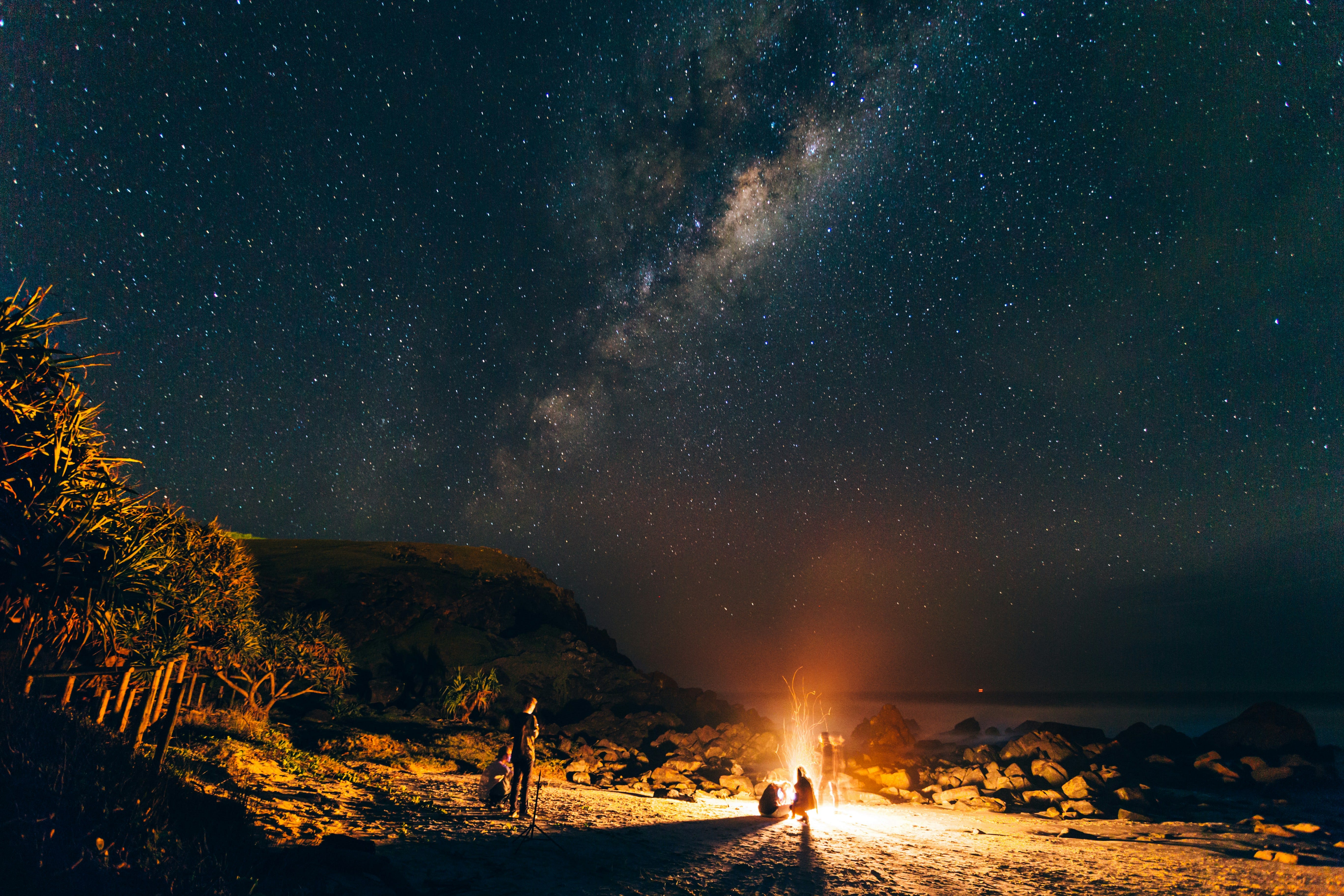
Which is funny because the very enthusiastic volunteer at Vinnies reminded me today, “Van Gogh was committed to a mental asylum and only sold one painting when he was alive. To his brother!”
And it seems that could be true. Van Gogh apparently suffered mental ill health and alcoholism, and lived in poverty for most of his life.
And now?
He is revered as one of the greatest Post-Impressionist painters in the history of Western art.
So, we have the power to choose what we care about and what we spend our time doing. Regardless of, and perhaps in spite of, external measures of “success.”
A Project Will Save You
Continuing with a similar theme, Rosie Spinks argues that doing creative work we care about could actually save us in the “AI job apocalypse.”
She says,
“Those of us who have built non-traditional, creative, network-based, portfolio-style careers are — despite our financial precarity — paradoxically well-prepared for this moment. While it might look like we’re being left behind by AI, I suspect we might actually be ahead of the game.
Because to be self employed in some kind of creative career for the past two decades (and probably before that) has been to hear a repeating message: The market does not value your labor.”
If you have ever tried to make money out of your creative work, you will know this struggle well. How do you help people to see the value in what you do? Rosie says, this experience could be valuable because we know the struggle already and also, we understand the intangible value of what we do, in creating meaning for ourselves.
The way non-traditional creative careers usually work is by moving from one project to the next (or juggling multiple projects at the same time), which aligns with our natural human instinct to create things, and gain satisfaction from our creations. Rosie’s husband discovered this after he was made redundant from his job and discovered a love for woodworking in the garage:
“That impulse to go to the garage and just start something is what differentiates us humans from machines. We need to feel we are making our way through the world, not just existing in it. We need to feel a sense of autonomy and progress that orientates us in time and space. And here’s the thing that all those people who are using AI to write their books and Substacks don’t seem to understand: The act of doing, creating, and plodding along is actually more important than the finished outcome. If you skip that part, you’ve just skipped the whole damn point.”
This is one of the best answers I’ve seen in recent times to the question, what makes us human? We’re being forced to examine this in new and urgent ways against a backdrop of new AI capabilities.
A Final Thought
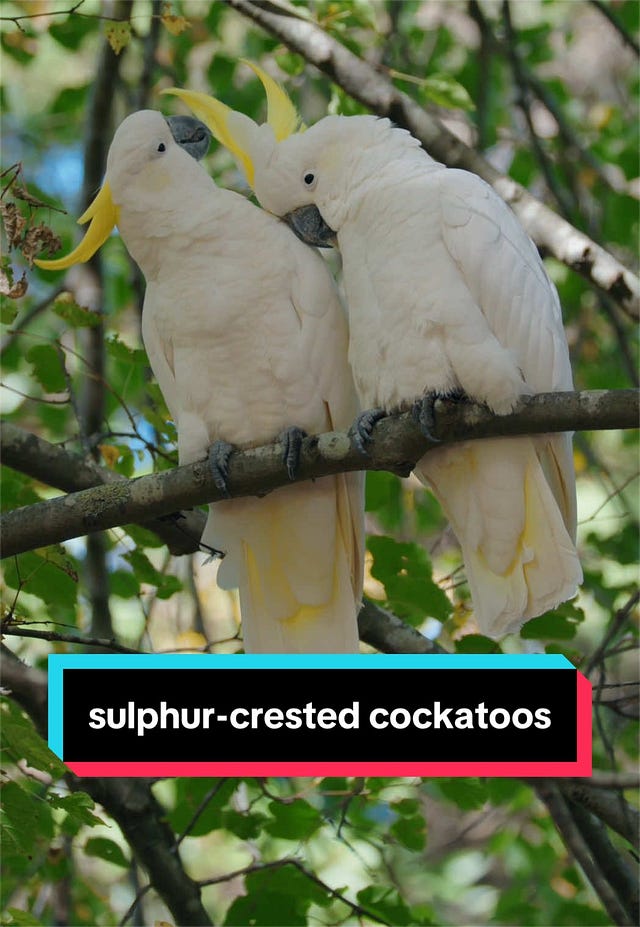
JeremyFilmsThings captures some stunning bird footage (not AI), and this quiet moment between two sulphur crested cockatoos is just so delightful that I had to share it (the TikTok video is below and the Instagram version is here).
 Tiktok failed to load.
Enable 3rd party cookies or use another browser
And that’s the end of this edition! I hope at least one thing brightened your day, inspired you to take action, or helped you return to what matters most.
🙏🏻